
After long-term storage (typically referring to storage for more than 6 months, or sealing according to the manufacturer’s LSAM/Storage Manual), the engine cannot be started directly before restarting; de-preservation and a comprehensive inspection must be performed. Requirements vary slightly between manufacturers, but the overall process is generally the same.
The following are the general requirements for marine diesel engines:
I. De-preservation

If the engine has undergone rust prevention and sealing (VCI, rust inhibitor, sealing oil, etc.):
1. Remove all blockages
- Including: Air intake port
- Exhaust port
- Crankcase breather
- Cooler water inlet
- Fuel inlet
- Turbocharger inlet/outlet
- Moisture-proof bags used to seal ports and precision parts
- Desiccants for dehumidifying internal cavities
- Rust-proof paper covering bare metal surfaces
Take out and dispose of all these storage protective materials thoroughly. Do not leave any fragments inside pipelines, airways or engine housings, as residual packaging debris will cause pipeline blockage and startup malfunctions.
2. Remove rust-preventive oil
If using:
- Storage oil
- Preservation oil
Follow the instructions: Replace with regular engine oil.
Some manufacturers require: The engine should be idled for pre-lubrication before the regular lubricating oil is changed.
II. Lubrication System Inspection (Most Important)
Before starting, you must confirm that the lubrication system is functioning properly.
include:
1. Check engine oil level.
2. Check if the engine oil is:
- Emulsification
- Influent
- Deterioration
- Oxidation
If the storage time exceeds one year, it is recommended to replace it directly:
- Engine oil
- Oil filter element
Pre-lubrication
This is the most crucial step after long-term storage.
Many manufacturers require: Establish oil pressure before starting.
How to use:
- Electric pre-lubrication pump
- External pre-lubrication device
Continue until the oil pressure reaches the specified value.
Without a pre-lubrication system: The oil injection can be disconnected, and oil pressure can be established by turning the starter motor.
Typical requirements: 20-60s.
III. Manual Turnover
Before starting: Manual operation is required.
The purpose is to confirm:
- No jamming
- No foreign objects
- Piston moves freely
General requirement: At least 2 to 4 rotations.
Large diesel engines:
- Requirement: at least 720°
- Even: 3-5 revolutions.
IV. Cooling System Inspection
Examine:
1. Coolant level
2. Check if the antifreeze concentration and pH level are ineffective.
3. Check if the pipe flange joints are leaking.
If it involves seawater cooling:
Inspect the seawater pump impeller, subsea valve, and filter.
V. Fuel System
Check if the fuel is old, contains water, or is contaminated.
If diesel fuel has been stored for more than one year:
Recommendation: Replace the diesel fuel. Then: Bleed the air.
Check: Fuel pump, high-pressure fuel pump, common rail system (if applicable).
VI. Air System
Check: Air filter.
If insects, birds, or foreign objects entered during storage, they must be removed.
Check the booster: Manually rotate the impeller.
Confirm: No friction; rotates smoothly.
VII. Electrical System
Inspection:
1. Battery:
- Voltage
- Capacity
- Wiring
2. Inspection: Starter motor.
3. Inspection: ECU (Electronic Control Unit)
Read: Fault Code.
Confirmation: No alarms.
VIII. Belts and rubber parts
Check: Air filter.
If insects, birds, or foreign objects entered during storage, they must be removed.
Check the booster: Manually rotate the impeller.
Confirm: No friction; rotates smoothly.

IX. Filter
Recommended items to check or replace:
✓ Oil filter
✓ Diesel fuel filter
✓ Oil-water separator
✓ Air filter
X. Initial Startup
First start: Do not load immediately.
Recommendation: Idle.
Observe:
- Oil pressure
- Coolant temperature
- Exhaust smoke color
- Vibration
- Abnormal noise
- Oil leak
- Water leak
- Air leak
General: Run for 15-30 minutes.
XI. Gradual loading
Manufacturers typically recommend gradually increasing the load.
For example:
- 25%
- 50%
- 75%
- 100%
Maintain each level for 10-20 minutes.
Observe:
- Exhaust temperature
- Water temperature
- Oil pressure
- Boost pressure
Only after confirming stability can normal operation begin.
XII. Recommended inspections (for storage for more than one year)
We recommend adding the following items:
- Change engine oil and oil filter.
- Change fuel filter.
- Change coolant (according to manufacturer’s recommendations).
- Check fuel injector condition.
- Check valve clearance (if necessary).
- Check turbocharger axial and radial clearances.
- Check crankcase breather system.
- Check rubber seal aging.
- Check engine control system parameters and fault records.
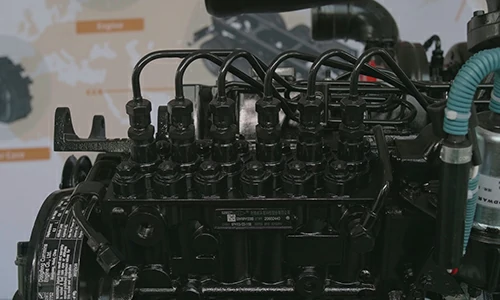
Recommended procedure (on-site operation sequence)
- Release the seals and remove all plugs and desiccants.
- Check the engine oil, fuel, coolant, and all fluid levels; replace all fluids if necessary.
- Manually rotate the engine to ensure it rotates freely without jamming.
- Pre-lubricate the lubrication system to establish normal oil pressure.
- Check the electrical, battery, and control systems to ensure there are no fault alarms.
- Check the turbocharger, air system, all filters, and piping seals.
- After the initial start, allow the engine to idle for 15-30 minutes, monitoring oil pressure, water temperature, exhaust smoke, leaks, and abnormal noise.
- Gradually increase the load in stages: 25% → 50% → 75% → 100%. Once all operating parameters stabilize, resume normal operation.


